
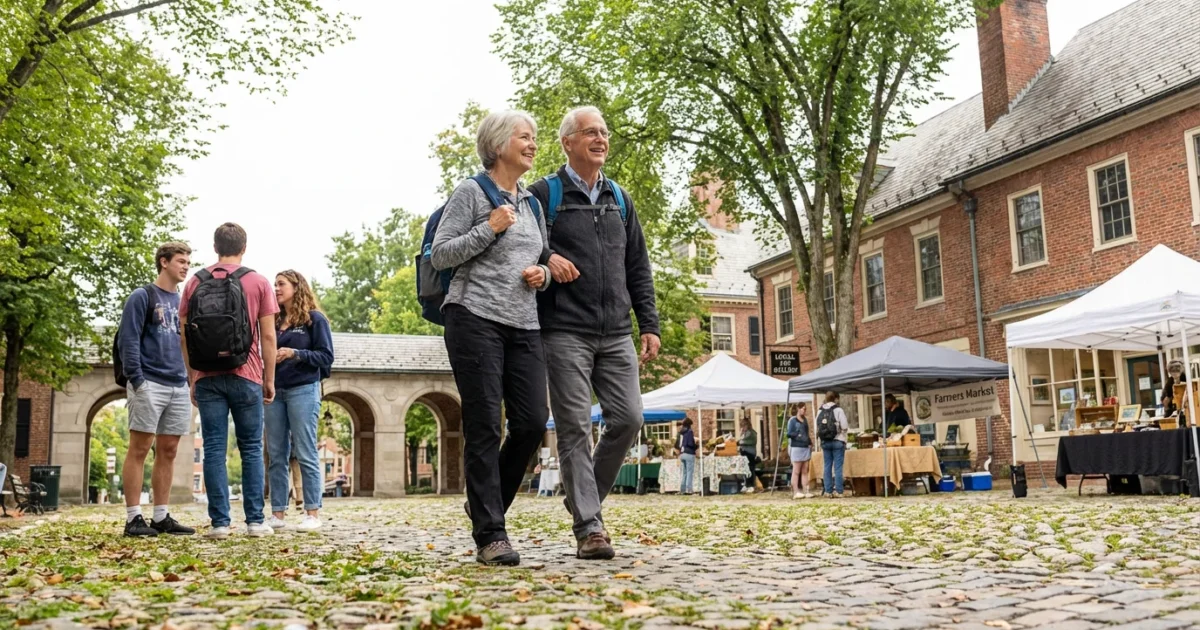
For many Americans approaching retirement, the ideal destination offers more than just a lower cost of living. You seek a vibrant community, intellectual engagement, and opportunities to stay active and connected. College towns frequently emerge as compelling options, providing a unique blend of cultural richness and economic accessibility. These communities often feature a younger demographic alongside retirees, creating an intergenerational environment that can keep you feeling vital and engaged.
This article explores why college towns represent a smart choice for retirement. We delve into their unique appeal, highlight specific affordable destinations across the country, and offer practical advice for planning your relocation. Discover how you can enjoy a fulfilling, culturally rich retirement without straining your budget.
Table of Contents
- What Makes College Towns Ideal for Retirement?
- Understanding Affordability in Retirement
- Top Affordable College Towns for Your Retirement
- Healthcare Access and Services in College Towns
- Navigating Taxes in Retirement Locations
- Planning Your Move: Practical Relocation Steps
- Frequently Asked Questions
- Making Your Decision

What Makes College Towns Ideal for Retirement?
College towns offer a distinct lifestyle that appeals to many retirees. The presence of a major university injects a dynamic energy into the local community, providing a wealth of resources and activities. You will find a stimulating environment that extends beyond the classroom.
In addition to traditional neighborhoods, many of these areas feature affordable senior living communities that provide great value and proximity to campus life.
The benefits of retiring in a college town are numerous. These communities often boast a high quality of life at a lower cost than major metropolitan areas. They also provide opportunities for lifelong learning and social engagement.
Here are key advantages of college towns for retirees:
- Intellectual Stimulation: Universities host public lectures, art exhibitions, concerts, and theatrical performances, often at discounted rates for seniors. Many offer audit programs or specific courses tailored for older adults.
- Cultural Amenities: Beyond academic events, you often find museums, botanical gardens, and diverse dining options. Local economies thrive on the university presence, fostering a vibrant arts and entertainment scene.
- Walkability and Green Spaces: Many college towns are designed for pedestrian traffic, featuring walkable downtowns and extensive park systems. Campuses themselves often offer beautiful green spaces for recreation.
- Healthcare Access: University-affiliated hospitals and medical centers provide advanced healthcare services and access to specialized care. These facilities are often at the forefront of medical research and treatment.
- Intergenerational Community: You can engage with students, faculty, and other retirees, fostering a diverse social circle. This blend of ages can provide fresh perspectives and opportunities for mentorship.
- Volunteer Opportunities: Universities and associated non-profits frequently seek volunteers, allowing you to contribute your skills and experience.
While many advantages exist, consider potential drawbacks. College towns can experience increased traffic and noise during semesters, particularly near campus. Some areas may see fluctuations in population density and service availability depending on the academic calendar. Assess whether these trade-offs align with your desired lifestyle.

Understanding Affordability in Retirement
When considering a college town for retirement, affordability extends beyond just housing costs. You must evaluate the complete financial picture, including state and local taxes, healthcare expenses, and daily living costs. A truly affordable location keeps your overall budget in check.
Before making the leap to a new town, it is wise to begin creating a budget for your retirement relocation to ensure all moving costs are covered.
As you analyze your budget, comparing the long-term benefits of renting vs. buying in retirement can help you choose the best housing path.
Housing often represents the largest expense. However, property taxes, state income tax on retirement income, and sales tax significantly impact your disposable income. Factors like utility costs, transportation, and groceries also vary by location. The Bureau of Labor Statistics (BLS) provides valuable data on consumer expenditures, helping you gauge typical costs in different regions. You can compare state tax burdens at the Tax Foundation website to understand potential impacts on your retirement income.

Top Affordable College Towns for Your Retirement
We have curated a list of affordable college towns known for their cultural vibrancy and accessible living costs. Each offers a unique blend of university amenities, community spirit, and financial advantages. Your ideal choice depends on your specific preferences for climate, activities, and proximity to family.
Athens, Georgia (University of Georgia)
Athens, home to the University of Georgia, offers a vibrant Southern charm with a youthful energy. The cost of living consistently remains below the national average, making it an attractive option for retirees. Housing costs are approximately 20% lower than the national average, according to recent data.
The city’s cultural scene thrives with university contributions, including the Georgia Museum of Art, Hodgson Concert Hall, and diverse athletic events. You will find a bustling downtown filled with independent shops, local restaurants, and live music venues. Healthcare access is strong, with Piedmont Athens Regional Medical Center and St. Mary’s Hospital providing comprehensive services.
- Pros:
- Low cost of living, particularly for housing.
- Rich cultural scene with university events and local venues.
- Vibrant downtown and diverse dining options.
- Proximity to Atlanta (about an hour’s drive) for larger city amenities.
- Mild winters, though summers are hot and humid.
- Cons:
- Hot, humid summers can be challenging.
- Traffic can be heavy during peak university semesters.
- Property taxes are relatively low for Georgia, but sales tax is 8%.
Columbia, Missouri (University of Missouri)
Columbia, Missouri, known as “CoMo,” balances small-town friendliness with the amenities of a larger city. The University of Missouri, often called Mizzou, anchors the community, contributing significantly to its cultural and economic landscape. Its cost of living sits well below the national average, with housing costs often 25% lower.
The university’s medical center, University of Missouri Health Care, provides top-tier healthcare services. You have access to a variety of cultural events, including theatrical productions, concerts, and sporting events. The city also features numerous parks, trails, and a vibrant arts district called the North Village Arts District.
- Pros:
- Very affordable cost of living.
- Excellent healthcare facilities through the University of Missouri Health Care system.
- Diverse cultural offerings, from academic lectures to live music.
- Extensive park system and outdoor recreational opportunities.
- Missouri does not tax Social Security benefits and offers significant deductions for other retirement income.
- Cons:
- Midwestern climate features cold winters and hot, humid summers.
- Can experience student-related noise and traffic in certain areas.
- Far from major coastal or mountain regions.
Lawrence, Kansas (University of Kansas)
Lawrence, home to the University of Kansas (KU), offers a progressive, artistic atmosphere in the heart of the Midwest. This city consistently ranks as one of the best college towns due to its dynamic community and accessible cost of living. Housing prices are generally 20-30% below the national average.
The city boasts a thriving arts scene, with numerous galleries, live music venues, and independent theaters. Massachusetts Street, the historic downtown, provides unique shopping and dining experiences. The University of Kansas Spencer Museum of Art and Lied Center of Kansas offer world-class performances and exhibitions. Lawrence Memorial Hospital serves the community’s healthcare needs.
“Home is not where you are from, it is where you belong.” — Unknown
- Pros:
- Strong arts and culture scene.
- Affordable housing and overall cost of living.
- Historic and vibrant downtown.
- Kansas offers a property tax relief program for seniors.
- Friendly, welcoming community.
- Cons:
- Midwestern climate with hot summers and cold winters.
- Kansas has a state income tax on retirement income, though it offers a generous deduction.
- Limited direct flight options from the local airport.
Blacksburg, Virginia (Virginia Tech)
Nestled in the scenic Blue Ridge Mountains, Blacksburg offers a charming, outdoors-oriented retirement. Virginia Tech provides the town with a strong academic backbone and a wealth of resources. The cost of living in Blacksburg is below the national average, with housing slightly higher than other towns on this list but still affordable compared to national figures.
The town provides abundant opportunities for outdoor recreation, including hiking, biking, and fishing in the surrounding mountains. Virginia Tech’s Moss Arts Center brings diverse performances and exhibitions to the area. LewisGale Hospital Montgomery and Carilion New River Valley Medical Center ensure access to quality healthcare.
- Pros:
- Beautiful mountain scenery and abundant outdoor activities.
- Strong sense of community and safety.
- Access to Virginia Tech’s cultural and academic resources.
- Virginia is generally tax-friendly for retirees, excluding some retirement income.
- A four-season climate with distinct changes.
- Cons:
- Winters can be cold with occasional snowfall.
- More isolated location, requiring travel for major city amenities.
- Transportation options outside of personal vehicles are limited.
Healthcare Access and Services in College Towns
One significant advantage of many college towns is their robust healthcare infrastructure. Universities frequently operate teaching hospitals and medical centers that serve as regional hubs for specialized care. These facilities often represent the cutting edge of medical research and treatment. You gain access to a wide range of medical professionals and services.
Beyond medical facilities, many university communities provide cost-effective recreation for retirees through fitness centers and outdoor campus parks.
University hospitals often boast specialized departments and state-of-the-art technology. They also train future doctors, nurses, and medical researchers. This environment fosters a higher standard of care and provides opportunities for participating in clinical trials. When researching potential locations, check the proximity and ratings of local hospitals. You can compare hospital quality and services using resources like Medicare.gov.

Navigating Taxes in Retirement Locations
Understanding the tax landscape of a potential retirement state is crucial for long-term financial planning. States vary widely in how they tax retirement income, property, and purchases. What appears affordable on housing might become expensive due to high state income taxes on pensions or 401(k) withdrawals.
Beyond local costs, looking at the most affordable states for retirement living can help you identify regions with the most favorable tax structures for seniors.
Consider these key tax categories when evaluating college towns:
- Income Tax: Some states fully tax all retirement income, while others offer exemptions for Social Security, pensions, or other retirement distributions.
- Property Tax: Local property taxes vary significantly, even within the same state. Look for homestead exemptions or senior tax relief programs that can reduce your burden.
- Sales Tax: The sales tax rate impacts your daily expenditures. Some states have high sales taxes but no income tax, balancing the overall burden.
- Estate/Inheritance Tax: A few states impose these taxes, which could affect your heirs.
Here is a simplified comparison of tax characteristics for the states highlighted:
| State | Income Tax on Retirement Income | Social Security Tax | State Sales Tax Rate | Average Property Tax Rate (Effective) |
|---|---|---|---|---|
| Georgia | Exempts up to $65,000 per person for ages 62-64, $130,000 for 65+ (including pensions, 401k withdrawals). | No | 4% (local option adds more, often 8%) | 0.87% |
| Missouri | Exempts up to 100% of public pension income, private pension income can be partially exempt based on AGI. | No (for most recipients) | 4.225% (local option adds more, often 7-9%) | 0.99% |
| Kansas | Taxes most retirement income, but offers a generous deduction for seniors below a certain AGI. | Partially (exempt if AGI is below $75,000) | 6.5% (local option adds more, often 8-10%) | 1.34% |
| Virginia | Exempts up to $12,000 of pension/IRA income for those 65+, with conditions. | No | 5.3% (local option adds more, often 6%) | 0.80% |
Note: Tax laws are complex and subject to change. Consult a tax professional for personalized advice. Data sourced from the Tax Foundation.
Planning Your Move: Practical Relocation Steps
Relocating for retirement represents a significant life event. Careful planning helps ensure a smooth transition to your new college town. You should approach the process systematically, addressing financial, logistical, and personal considerations.
Here is a step-by-step guide to planning your retirement relocation:
- Assess Your Finances: Create a detailed budget for your new life, accounting for all expenses, including housing, utilities, taxes, healthcare, and leisure activities. Factor in moving costs.
- Visit Potential Towns: Spend time in your top college town choices at different times of the year. Experience the local culture, explore amenities, and assess the lifestyle firsthand. This helps confirm your fit.
- Downsize Your Possessions: Begin decluttering and organizing your belongings well in advance. Decide what you will keep, sell, donate, or discard. This streamlines the packing process.
- Find a Real Estate Professional: Work with a local real estate agent familiar with the retirement market in your chosen college town. They can help you navigate housing options and neighborhoods.
- Plan for Healthcare: Research doctors, specialists, and hospitals in your new area. Transfer prescriptions and medical records. Ensure your insurance coverage transitions smoothly. You can use resources like Eldercare Locator to find local services.
- Arrange for Utilities and Services: Coordinate the transfer or setup of electricity, water, internet, and other essential services at your new home. Cancel services at your old residence.
- Update Important Documents: Change your address for banking, investments, mail, and government agencies. Update your driver’s license and vehicle registration.
- Build a New Support Network: Actively seek opportunities to meet new people. Join clubs, volunteer groups, or university-affiliated organizations to integrate into the community.
Frequently Asked Questions
What are the typical age demographics in college towns?
College towns feature a unique demographic blend. You will find a large student population (ages 18-24), along with faculty, staff, and their families. This creates a vibrant intergenerational mix. Many college towns also attract a significant population of retirees who appreciate the cultural amenities and intellectual environment.
How do property taxes compare in college towns?
Property taxes vary significantly by state and even by county within a state. While college towns might have slightly higher property values in areas close to campus, many states offer homestead exemptions or property tax relief programs for seniors. Research specific local tax rates and potential benefits for retirees in your chosen town.
Are college towns safe for retirees?
Many college towns are generally safe, benefiting from active community policing and a strong sense of local pride. However, like any community, specific neighborhoods may have varying crime rates. You should research local crime statistics and visit areas of interest to assess safety and comfort levels.
Do college towns offer good public transportation?
Many college towns offer excellent public transportation, often including free or discounted bus services for residents and seniors. These systems frequently connect residential areas with the university campus, downtown, and major shopping centers. This can reduce your reliance on personal vehicles.
What kind of volunteer opportunities are available?
Volunteer opportunities in college towns are abundant and diverse. You can volunteer at the university in various capacities, assist local non-profits, mentor students, or contribute to cultural institutions like museums and libraries. These opportunities provide meaningful engagement and help you connect with the community.

Making Your Decision
Choosing a retirement destination is a deeply personal decision. The most affordable college town for your retirement is one that aligns with your financial comfort, lifestyle aspirations, and personal values. College towns offer a compelling combination of cultural richness, intellectual stimulation, and often a lower cost of living. You can enjoy an active and engaged retirement within a supportive community.
We encourage you to conduct thorough research, visit potential locations, and consider your unique priorities for healthcare, taxes, and community engagement. By doing so, you will find the perfect college town to begin your next chapter.
Disclaimer: This article is for informational purposes only. Cost of living, taxes, and local conditions change over time. We encourage readers to verify current information through official sources and visit potential retirement destinations before making relocation decisions.









Leave a Reply