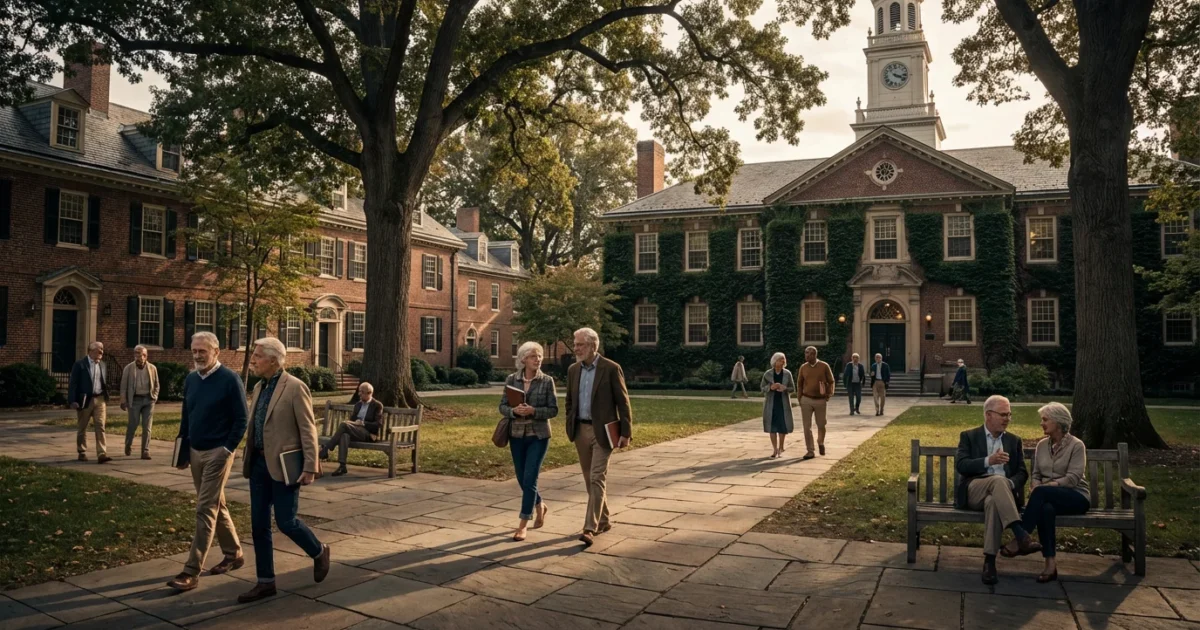
Retirement offers a profound opportunity for personal growth and continued learning. For many Americans 55 and older, this means exploring environments that actively support intellectual curiosity and an engaged lifestyle. College towns, vibrant hubs of innovation and culture, often present an ideal setting for these pursuits, fostering an enriching retirement experience that extends far beyond traditional leisure.
These dynamic communities provide unparalleled access to educational resources, cultural events, and intergenerational connections. You can find opportunities for everything from auditing university courses to attending lectures, concerts, and sporting events. The energy of a college town, combined with excellent healthcare access and diverse amenities, makes these locations highly attractive for retirees prioritizing active minds and active lives.
Table of Contents
- Why Choose a College Town for Retirement?
- Key Considerations for Your College Town Retirement
- Featured College Towns for Retirees
- Understanding Senior University Programs
- Relocation Planning for Your Retirement Move
- Frequently Asked Questions

Why Choose a College Town for Retirement?
College towns offer a unique blend of intellectual stimulation and community engagement, making them highly desirable for retirees. These environments provide ongoing opportunities for lifelong learning and personal enrichment. Many universities actively encourage seniors to participate in academic and cultural life, fostering an atmosphere of continuous growth.
For those who prioritize physical fitness alongside mental growth, active adult communities often offer specialized amenities that complement the academic resources of a university town.
The presence of a major university ensures a rich calendar of events, including lectures, concerts, theater productions, and art exhibitions. You gain access to world-class libraries and recreational facilities, often at discounted rates for seniors. This vibrant cultural scene keeps your mind sharp and your social calendar full.
Economically, college towns often boast stable local economies supported by the university and its associated industries. This can translate into a wide array of services, diverse dining options, and a generally educated populace. You also benefit from robust healthcare infrastructure, frequently anchored by university hospitals and medical research centers.
Benefits of Retiring in a College Town
- Access to Lifelong Learning: Universities offer auditing options, continuing education courses, and senior-specific programs.
- Rich Cultural Scene: Enjoy live music, theater, art galleries, and diverse dining experiences.
- Intellectual Stimulation: Engage with university faculty, students, and a community valuing education.
- Excellent Healthcare: Often home to top-tier university medical centers and specialized care.
- Vibrant Social Opportunities: Participate in campus events, community groups, and intergenerational activities.
- Economic Stability: University presence often contributes to a resilient local economy and a wide range of services.
- Recreational Facilities: Access to gyms, pools, walking trails, and sporting events.

Key Considerations for Your College Town Retirement
Choosing the right college town involves more than just a vibrant campus; you must align the community with your personal priorities. Evaluate factors like cost of living, climate, healthcare access, and the overall tax environment. These practical considerations significantly impact your quality of life and financial well-being in retirement.
Following a step-by-step guide can help you systematically evaluate these different factors to find your perfect fit.
Consider the size and pace of the town. Some college towns are bustling urban centers, while others offer a more relaxed, small-town feel. Think about your preferred lifestyle: do you thrive in a walkable environment with constant activity, or do you prefer a quieter setting with easy access to nature?
Factors to Evaluate When Choosing
- Cost of Living: Research housing costs, groceries, utilities, and transportation in potential towns. Major university towns can sometimes have higher housing costs due to student demand.
- Tax Friendliness: Investigate state income tax on retirement income, property taxes, and sales tax rates. States like Florida and Texas have no state income tax, which can be advantageous. Data from the Tax Foundation illustrates these differences across states.
- Climate and Weather: Determine your preferred climate. Do you seek year-round sunshine, four distinct seasons, or mild winters? Consider how extreme weather events might affect your daily life.
- Healthcare Infrastructure: Assess the quality and availability of hospitals, specialists, and primary care physicians. University hospitals frequently rank among the best in the nation, offering cutting-edge medical care. Medicare.gov provides tools to compare care providers.
- Transportation Options: Consider public transit, walkability, and ease of travel to family and friends. Some college towns offer excellent bus systems or pedestrian-friendly downtown areas.
- Proximity to Family: Evaluate how far you are willing to move from your loved ones. Balance your desire for a new environment with the importance of family connections.
- Availability of 55+ Communities: While not exclusive to college towns, many desirable locations offer age-restricted communities with amenities tailored to retirees.
“Home is not where you are from, it is where you belong.” — Unknown

Featured College Towns for Retirees
We present a curated selection of college towns renowned for their retirement appeal, particularly for those interested in lifelong learning. Each offers a distinct blend of academic resources, cultural vibrancy, and quality of life. Consider these examples as you explore your own ideal retirement destination.
Chapel Hill, North Carolina
Chapel Hill, home to the University of North Carolina at Chapel Hill, consistently ranks as a top retirement destination. It offers a mild climate, a charming downtown, and a strong sense of community. UNC provides extensive senior programs, including opportunities to audit classes and participate in various lifelong learning initiatives.
The town boasts a vibrant arts scene, exceptional dining, and beautiful natural surroundings. You gain access to UNC Health Care, a leading academic medical center. The cost of living in Chapel Hill is higher than the national average, particularly for housing, but significantly less than many major metropolitan areas.
Pros of Chapel Hill
- Mild four-season climate.
- Outstanding healthcare with UNC Health Care.
- Rich cultural life and strong sense of community.
- Numerous senior learning opportunities at UNC.
- Beautiful arboretums, parks, and green spaces.
Cons of Chapel Hill
- Housing costs are above the national average.
- Traffic can be congested during university events.
- Property taxes, while not excessively high, are a consideration in North Carolina.
Ann Arbor, Michigan
Ann Arbor, home to the University of Michigan, offers a dynamic urban environment with a strong academic pulse. It provides world-class cultural attractions, diverse culinary options, and a highly educated population. The University of Michigan hosts numerous programs for seniors, including auditing courses and specific institutes for lifelong learning.
Residents experience all four seasons, with warm summers and snowy winters. The city provides excellent public transportation and a walkable downtown. University of Michigan Health System offers top-tier medical care, contributing to robust healthcare access for residents.
Pros of Ann Arbor
- Exceptional cultural and culinary scene.
- Four distinct seasons, appealing to those who enjoy varied weather.
- Premier healthcare facilities through the University of Michigan Health System.
- Abundant educational and volunteer opportunities for seniors.
- Strong job market and diverse community.
Cons of Ann Arbor
- Property taxes in Michigan can be relatively high.
- Winters can be long and cold, with significant snowfall.
- Cost of living, especially housing, is higher than the national average.
Gainesville, Florida
Gainesville, home to the University of Florida, provides a vibrant yet relaxed atmosphere in a tax-friendly state. The University of Florida offers extensive programs for seniors, including the highly regarded “Osher Lifelong Learning Institute” (OLLI). You also benefit from year-round warm weather, which attracts many retirees.
UF Health Shands Hospital anchors a strong healthcare system in the region. The city offers a blend of natural beauty, with numerous parks and springs, and cultural attractions. Florida has no state income tax, providing a significant financial advantage for retirees.
Pros of Gainesville
- No state income tax in Florida, reducing overall tax burden.
- Year-round warm climate.
- Comprehensive senior learning programs at the University of Florida.
- Excellent healthcare facilities, including UF Health Shands.
- More affordable cost of living compared to some other college towns.
Cons of Gainesville
- Hot and humid summers, which some find uncomfortable.
- Property insurance costs can be higher due to hurricane risk.
- Lacks mountains or dramatic elevation changes, if that is a preference.
Boulder, Colorado
Boulder, nestled at the foothills of the Rocky Mountains, is home to the University of Colorado Boulder. This city offers unparalleled outdoor recreation alongside a highly educated, active community. CU Boulder provides various opportunities for seniors, including auditing courses and engaging in community learning programs.
Boulder boasts a moderate climate with over 300 days of sunshine annually, despite its snowy winters. The city emphasizes healthy living and sustainability, with extensive bike paths and access to vast open space. Healthcare access is robust, though the cost of living, particularly housing, is among the highest in the nation.
Pros of Boulder
- Exceptional access to outdoor activities: hiking, biking, skiing.
- Stunning natural beauty and mountain views.
- Over 300 days of sunshine annually.
- Strong emphasis on health, wellness, and environmental sustainability.
- High-quality education and cultural opportunities at CU Boulder.
Cons of Boulder
- Extremely high cost of living, especially for housing.
- Colorado taxes retirement income, though there are deductions.
- Can experience heavy snowfall in winter.

Understanding Senior University Programs
Many universities actively welcome retirees, offering various programs designed to foster lifelong learning. You can engage with academic life without the pressure of earning a degree. These opportunities range from auditing existing courses to enrolling in specialized senior-focused institutes.
Auditing a class means attending lectures and participating in discussions without receiving credit or a grade. Many institutions offer free or significantly reduced tuition for seniors auditing classes. This allows you to explore subjects of interest, from history and literature to science and art, at your own pace.
Beyond auditing, look for Osher Lifelong Learning Institutes (OLLIs) or similar programs. OLLIs are member-driven organizations offering a diverse curriculum of non-credit courses, lectures, and special events specifically for adults 50+. These programs often include social activities, field trips, and opportunities for peer-to-peer learning.
How to Access Senior Programs
- Contact the University’s Registrar Office: Inquire about senior auditing policies and tuition waivers.
- Explore Continuing Education Departments: Many universities have departments dedicated to non-credit adult education.
- Search for “Osher Lifelong Learning Institute (OLLI)”: OLLIs are prevalent at universities nationwide and cater specifically to older adults.
- Visit University Websites: Look for sections on community engagement, senior programs, or lifelong learning.
- Attend Information Sessions: Universities often host open houses or online sessions to explain their offerings to the community.

Relocation Planning for Your Retirement Move
Moving in retirement involves careful planning and execution. A well-organized approach ensures a smoother transition to your new college town. Start by creating a detailed timeline and budget, accounting for all potential expenses and logistical challenges.
A successful move often begins with learning how to downsize your home for retirement effectively before your transition.
Begin decluttering your current home early, deciding what to keep, sell, donate, or discard. Research moving companies thoroughly, obtaining multiple quotes and checking references. If downsizing, plan for storage solutions or consider selling items through estate sales or online marketplaces.
Ensure you update your address with all essential services, including banks, government agencies, and healthcare providers. Transfer medical records, prescriptions, and insurance policies well in advance of your move. Establish new utilities and services in your new home before you arrive.
Essential Relocation Steps
- Define Your Budget: Calculate moving costs, temporary housing, and initial setup expenses.
- Research Moving Companies: Obtain quotes from at least three reputable movers and verify their insurance.
- Declutter and Downsize: Sort through belongings methodically, selling or donating what you no longer need.
- Update Addresses and Services: Inform banks, Medicare, Social Security, and mail forwarding.
- Transfer Healthcare Records: Securely move medical files, prescriptions, and find new doctors. The Eldercare Locator can assist with local services.
- Arrange Utilities: Schedule disconnections at your old home and connections at your new residence.
- Plan for Pets: If you have pets, research local veterinarians and pet-friendly housing options.
- Visit Your New Community: Spend time in your chosen college town before moving to finalize decisions and familiarize yourself.
Frequently Asked Questions
What are the typical costs associated with auditing university classes as a senior?
Costs vary significantly by institution and state. Many public universities offer free or deeply discounted auditing for state residents over a certain age, often 60 or 65. Private universities may charge a nominal fee or a percentage of regular tuition. Always check with the specific university’s registrar or continuing education department for their senior auditing policy.
Do college towns offer good healthcare options for retirees?
Yes, many college towns boast excellent healthcare facilities. Major universities often have affiliated teaching hospitals and medical centers, which provide advanced care and access to specialists. These facilities frequently rank among the best nationally and are key resources for residents. You can research quality ratings on Medicare.gov.
Are 55+ communities available in most college towns?
The availability of 55+ communities varies. Some college towns, especially those that are popular retirement destinations, feature dedicated age-restricted communities with amenities like clubhouses, fitness centers, and social activities. In other college towns, you might find more mixed-age housing options. Research specific towns for local housing market details.
How can I connect with other retirees in a college town?
College towns offer numerous avenues for social connection. Enroll in senior university programs like OLLI, join campus clubs or volunteer organizations, and attend university events. Local community centers, libraries, and faith-based groups also provide opportunities to meet new people and build a social network. Explore town-specific senior groups and activities.
Is it difficult to adjust to the energy of a college town as a retiree?
Adjusting to the energy of a college town depends on your personal preferences. Many retirees appreciate the vibrancy, cultural opportunities, and intergenerational connections. Others might find the increased traffic or occasional noise disruptive. Visiting a potential town during the academic year helps you gauge the atmosphere and determine if it suits your lifestyle.
What are the tax implications of retiring in a college town in a different state?
Relocating to a different state has significant tax implications. States vary widely on how they tax retirement income, including Social Security benefits, pensions, and 401(k) withdrawals. Some states have no income tax, while others offer deductions or exemptions for seniors. Consult resources like the Tax Foundation or a financial advisor to understand the specific tax environment of your chosen state.
Disclaimer: This article is for informational purposes only. Cost of living, taxes, and local conditions change over time. We encourage readers to verify current information through official sources and visit potential retirement destinations before making relocation decisions.









Leave a Reply